If you have scoliosis, you’ve probably asked yourself:
- Should I be working out at all?
- Or am I going to make it worse?
- The short answer is yes, you should absolutely train.
- The longer answer is: only if you understand how your spine is actually functioning.
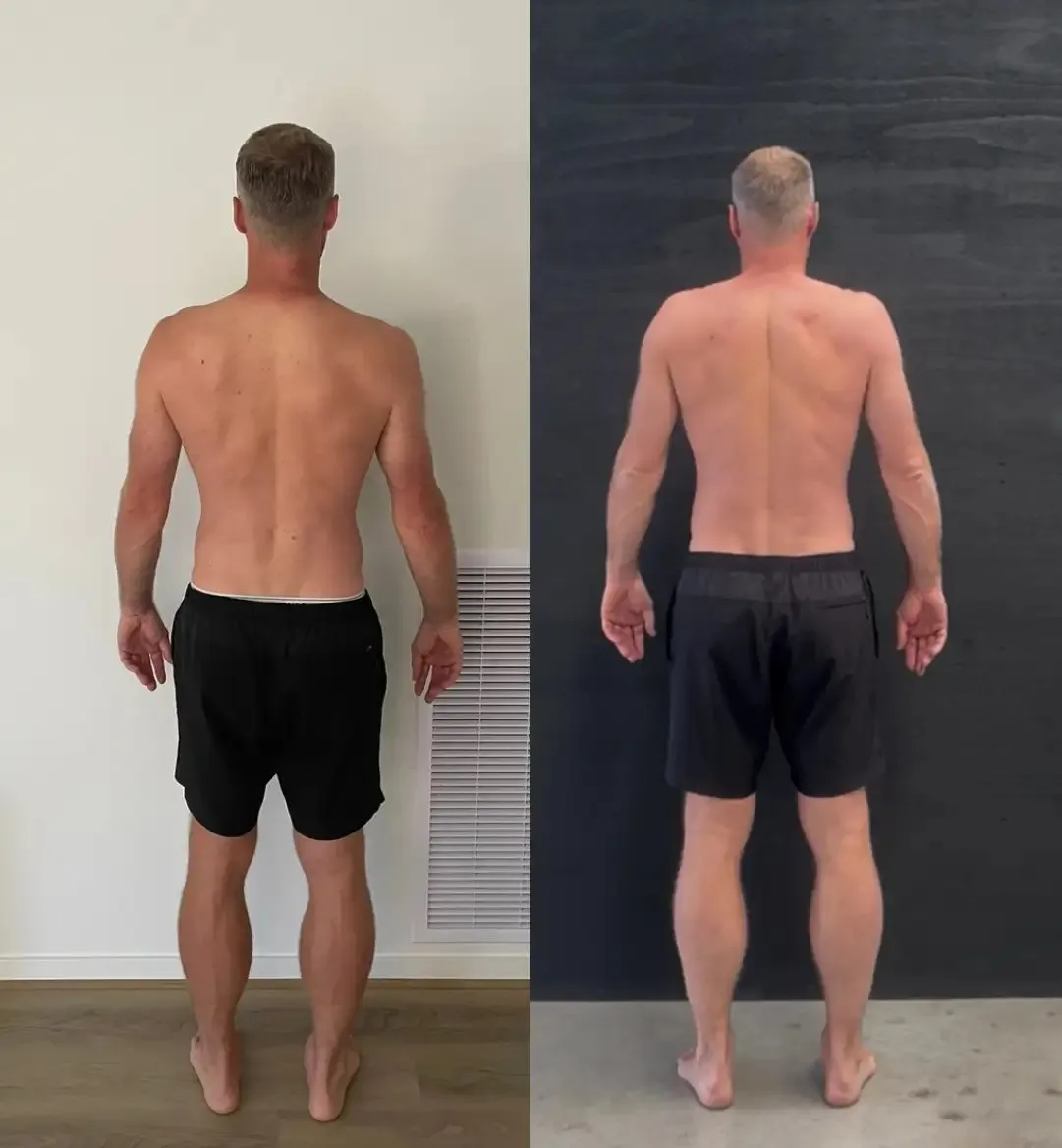
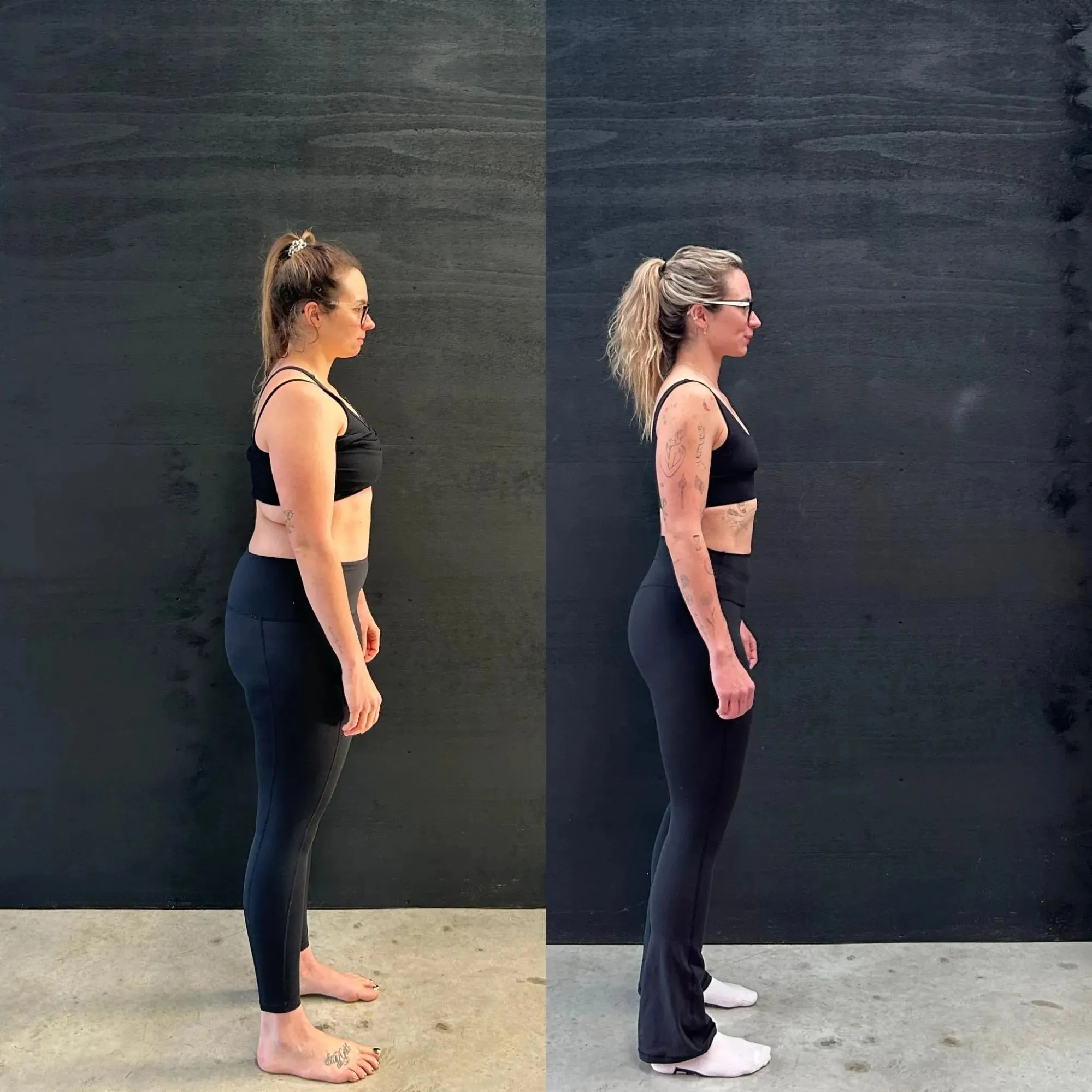
At Functional Patterns Surf Coast, we see many people who were told to either “just strengthen your core” or “avoid exercise.” Neither approach is precise enough. Scoliosis is not just a sideways bend, it’s a three-dimensional structural pattern that affects rotation, breathing, load transfer and long-term spinal health.
Let’s break this down properly.
Understanding Scoliosis
Definition and Types
Scoliosis is a lateral curvature of the spine that almost always involves vertebral rotation. That rotation affects the rib cage, pelvis and muscular tension patterns. It’s not simply cosmetic, it changes how force moves through your body.
There are structural forms of scoliosis, where vertebral shape is altered, and functional forms, where asymmetry develops due to postural habits, injury or chronic loading patterns. In both cases, the spine adapts to stress.
The question isn’t “Can you exercise?” The question is “What kind of stress are you adding to an already asymmetric system?”
Common Symptoms
People with scoliosis often experience persistent back pain, uneven shoulders or hips, reduced mobility and fatigue during prolonged standing or sport. Some feel tight on one side and weak on the other. Others feel unstable during rotational activities like surfing or running.
These symptoms are rarely solved by stretching alone. They reflect altered body alignment and inefficient load distribution.
Why Spinal Health Matters
Your spine is not meant to be rigid. It’s meant to distribute force efficiently. When curvature and rotation are present, force often concentrates in specific segments. Over time, that can mean irritation, stiffness and recurring flare-ups.
Good spinal health is not about forcing your spine straight. It’s about improving how it handles movement and load.
The Benefits of Working Out With Scoliosis
Avoiding exercise rarely improves scoliosis. In fact, inactivity can reduce muscular support and worsen discomfort.
When training is done intelligently, several things improve.
Back Pain Relief
Structured strength training for scoliosis improves how force travels through your hips, trunk and shoulders. When load is better distributed, irritated spinal segments often settle down.
Back pain relief doesn’t come from doing more random exercises, it comes from improving coordination and alignment.
Improved Mobility and Flexibility
Mobility exercises are useful, but only if they are directional.
Many people stretch both sides equally, even though scoliosis is asymmetrical. This can reinforce imbalance. Instead, mobility should target restricted regions while building control in unstable ones.
When thoracic rotation, rib cage expansion and pelvic positioning improve, movement feels smoother and less forced.
Strength Training for Scoliosis
Strength training is not dangerous for scoliosis. Poorly structured strength training is.
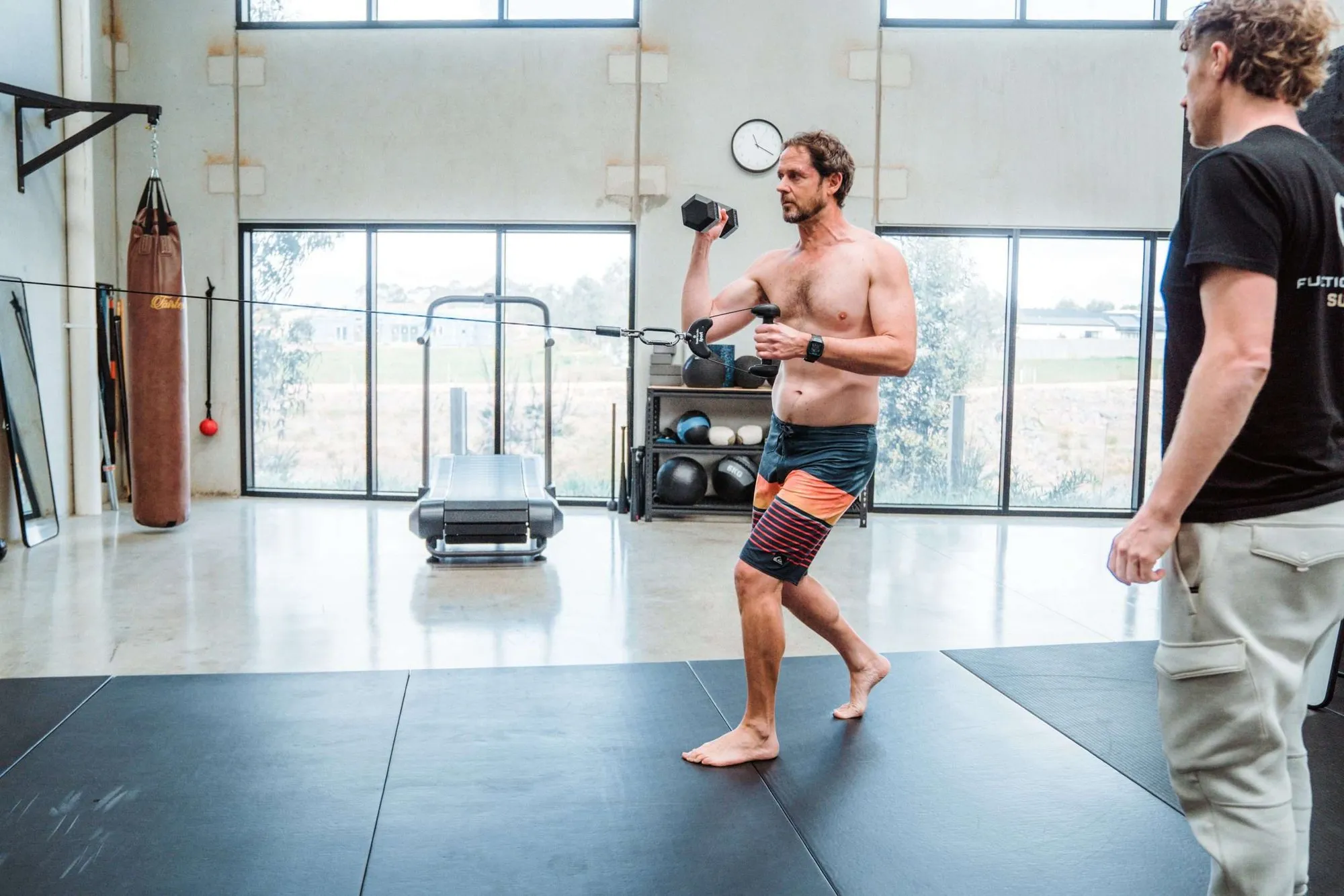
Functional fitness that integrates unilateral loading, rotational control and contralateral coordination can dramatically improve stability and performance. However, heavy bilateral compression without correcting alignment can reinforce asymmetry.
Training must respect the curve pattern.
What To Consider Before Starting
Get a Proper Assessment
Before beginning any program, it’s important to evaluate:
- Curve direction
- Rib rotation
- Pelvic positioning
- Gait pattern
- Breathing mechanics
This is not something a generic online video can determine.
At Functional Patterns Surf Coast, assessment is the foundation of everything we do. Body alignment dictates exercise selection.
Tailor Workouts to Your Structure
There is no universal scoliosis workout. Adaptive workouts are built around the individual, not the diagnosis.
Some people need more hip internal rotation work. Others need rib cage expansion. Some need to improve how they walk before they lift heavy.
Generic programs don’t account for that.
Recommended Exercise Approach
Mobility That Respects Asymmetry
Mobility exercises should restore joint mechanics without destabilising already vulnerable segments. This often includes thoracic rotation drills, breath-driven expansion work and hip repositioning.
Stretching alone is rarely enough. Control must accompany range.
Core Stability Training That Transfers
Core stability training for scoliosis isn’t about planks for time. It’s about improving how the trunk resists unwanted rotation while still allowing coordinated movement.
Anti-rotation patterns, integrated breathing and load transfer drills are more effective than isolated abdominal work.
True posture correction comes from this integration.
Posture Correction Through Movement
Posture is not a position you hold. It’s an output of how you move.
When functional movement improves, particularly gait and rotational control, posture begins to self-organise.
This is a major difference between cosmetic posture correction and structural change.
Creating a Holistic Fitness Routine
Scoliosis management works best when fitness and therapeutic exercises are integrated.
Combine Fitness and Physical Therapy Principles
Physical therapy scoliosis approaches often focus on isolated correction drills. These are useful, but they must transfer into real movement, walking, lifting, surfing, carrying.
If correction doesn’t transfer, the nervous system reverts to old patterns.
Adaptive Workouts for Every Level
Whether you’re a teenager newly diagnosed or an adult with longstanding curvature, training can be adapted.
Load can be modified. Angles can be adjusted. Rotational bias can be respected. That’s what holistic fitness means, not avoiding effort, but applying it precisely.
The Role of Surf Coaching on the Surf Coast
Living on the Surf Coast means many people with scoliosis still want to surf. That’s not a problem, but surfing is rotational and asymmetrical.
Without corrective strength work, surfing can amplify imbalance. With proper preparation, it can become a powerful form of therapeutic exercise.
Surf coaching integrated with corrective strength training can improve:
- Balance
- Trunk rotation
- Hip drive
- Spinal endurance
It also improves mental health. Chronic pain often reduces confidence. Movement restores it.
Injury Prevention Strategies
Injury prevention is about preparation.
A proper warm-up should include controlled mobility exercises and breath-driven activation, not just static stretching.
High-risk activities include heavy spinal compression without alignment control and aggressive twisting under load. These aren’t forbidden, but they must be earned.
Recovery matters as much as training. Sleep, low-load mobility and structured progression allow tissues to adapt safely.
Community and Support
Scoliosis support groups can provide encouragement and shared experience, but professional guidance ensures advice is biomechanically sound.
Working with a local practitioner who understands functional movement allows you to progress safely and confidently.
Final Thoughts
So, working out with scoliosis: yes or no?
Yes. But not randomly.
Exercise is one of the most powerful tools for improving spinal health, mobility and back pain relief. The key is understanding body alignment, respecting asymmetry and building strength progressively.
At Functional Patterns Surf Coast, we focus on posture correction, injury prevention and long-term structural balance, not temporary fixes.
If you’re living on the Surf Coast and unsure how to train with scoliosis, start with an assessment. Build from there. Move better. Get stronger. Progress intelligently.