Your lymphatic system carries fluid, proteins and immune cells from your tissues back towards your bloodstream. Unlike blood, it has no heart to push it along.
So what moves it?
What keeps lymph moving
- The vessels themselves. Lymph vessels contract in small rhythmic pulses, with valves that stop the fluid flowing backwards.
- Your muscles. Every time a muscle contracts it squeezes the vessels around it. Walking is a good example: the calves act as a pump for the lower legs.
- Your breathing. Deep breathing changes the pressure inside your chest and belly, which helps draw lymph upwards.
- Changing position. Long periods of sitting or standing still are when fluid tends to pool, which is why ankles can swell after a long flight.
Put simply, the body is built to move lymph by moving.
Is a rebounder worth buying?
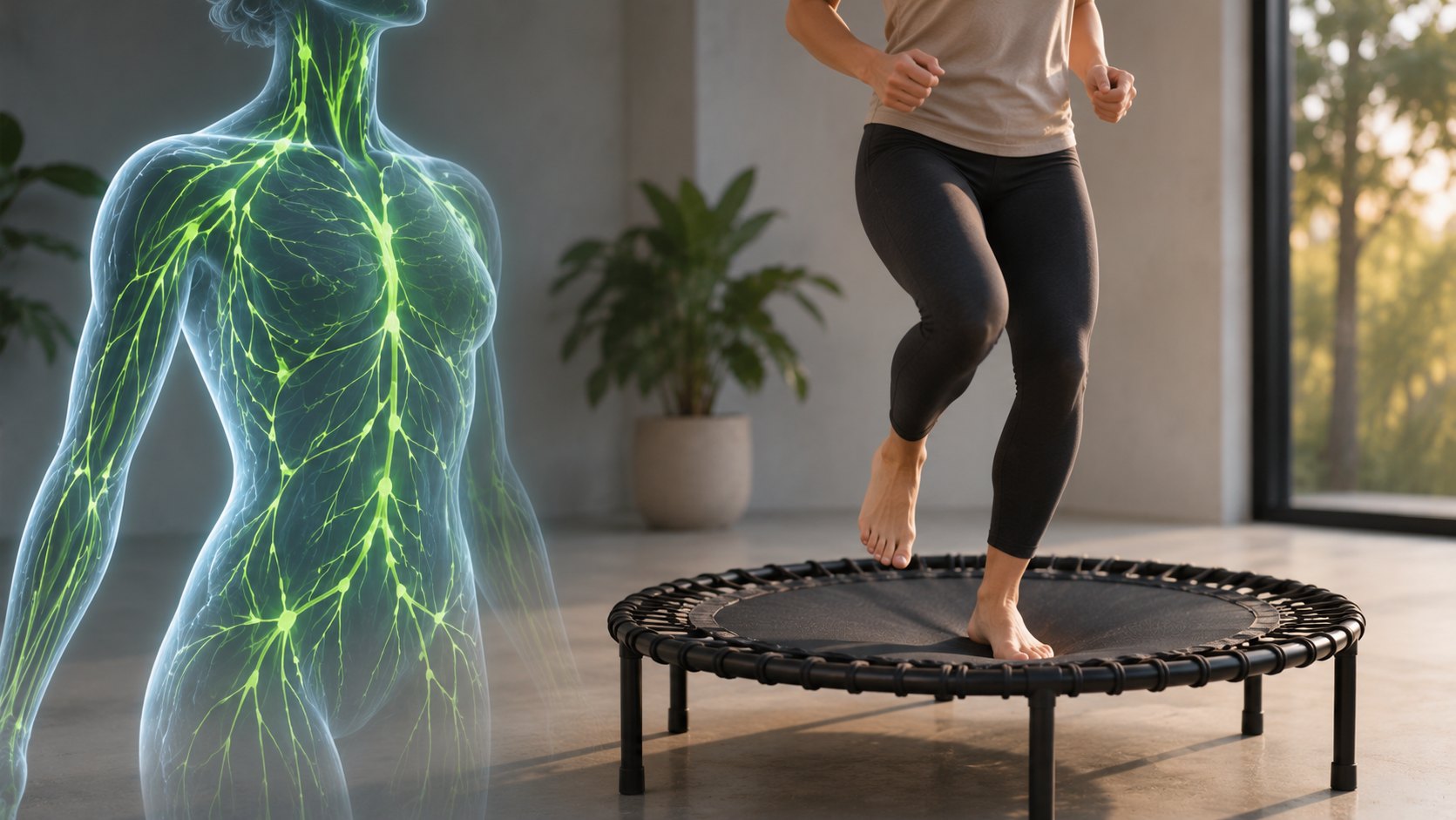
Rebounders, or mini trampolines, are often marketed as an effective way to improve lymphatic drainage. You may have seen claims that bouncing increases lymph flow by many times.
However, there is very little direct research demonstrating that rebounding provides any unique benefit to lymphatic function.
While bouncing involves repeated muscular contractions, which can assist lymph movement, it doesn't necessarily address the underlying movement restrictions or mechanical inefficiencies that deserve greater attention.
A rebounder might provide a way to incorporate movement into your day, but it isn't a substitute for developing better movement mechanics and whole-body coordination.
Rather than relying on repetitive bouncing, we'd encourage a more comprehensive approach to developing the body's ability to produce coordinated, powerful and elastic movement. This includes progressively developing the physical capabilities required for sprinting.
Developing the ability to sprint
One of the physical capabilities we ultimately want to develop is sprinting.
Sprinting requires the body to coordinate powerful muscular contractions, manage and transfer mechanical loads, and utilise elastic recoil throughout the kinetic chain. These dynamic movements engage the muscular and mechanical mechanisms that assist lymphatic circulation.
However, simply telling someone to go out and sprint misses an important part of the equation. If their biomechanics are inefficient, sprinting can reinforce existing movement dysfunctions and place unnecessary stress on particular joints and tissues.
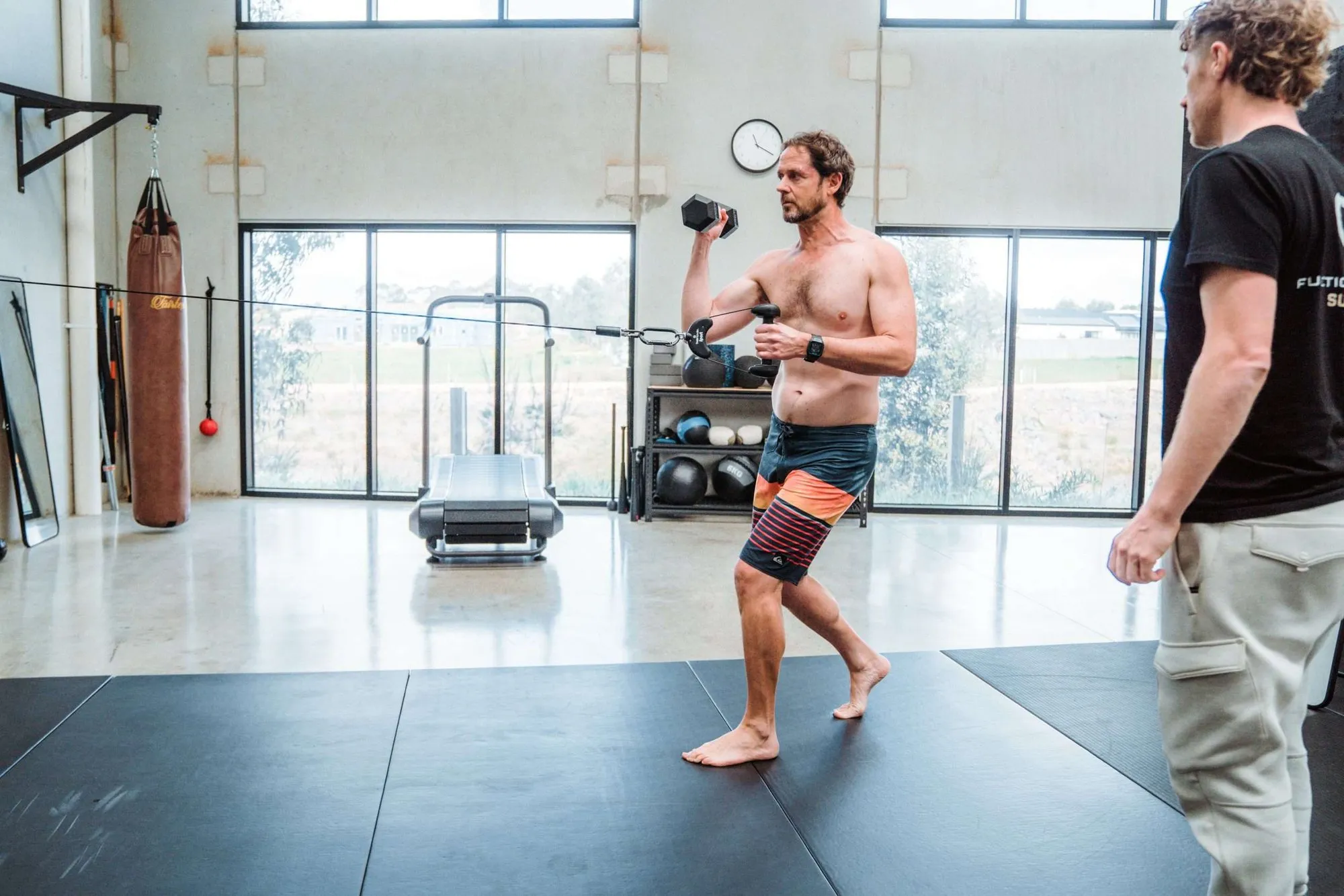
At Functional Patterns, our training is designed to progressively improve the way your body moves, with the longer-term objective of developing the coordination, structural integration and mechanical efficiency required for sprinting.
Rather than immediately exposing the body to the demands of high-speed movement, we work towards building the physical capabilities that allow you to produce those movements more effectively.
The aim is to develop the capacity for powerful, coordinated and elastic whole-body movement while reducing unnecessary mechanical stress associated with inefficient movement strategies.
The goal isn't simply to bounce more or sprint harder. It's to develop a body that is mechanically capable of producing powerful, coordinated and efficient movement.
If you would like help building more movement into your week, our 1 on 1 training in Torquay starts with an assessment of how you move.
Simple ways to help every day
Rather than looking for another exercise or piece of equipment to stimulate lymphatic flow, we believe the priority should be improving the way your body moves.
Some practical considerations include:
- Address movement restrictions. Incorporate appropriate myofascial work and corrective exercises to improve tissue mobility and movement capacity.
- Break up prolonged sitting. Regularly change positions, get up and move around rather than remaining stationary for extended periods.
- Improve your movement mechanics.** Develop better coordination and structural integration through standing, walking, running and throwing.
-Develop whole-body movement capacity. Train in ways that encourage coordinated muscular contractions, effective load distribution and elastic movement throughout the body.
The objective isn't simply to get more movement into your day. It's to develop a body that can move efficiently, distribute mechanical loads and produce coordinated movement across a range of physical demands.
If you're looking for a new way to address lymphatic flow whilst simultaneously building a body that moves well long term then click the button below and book in for an initial assessment today.