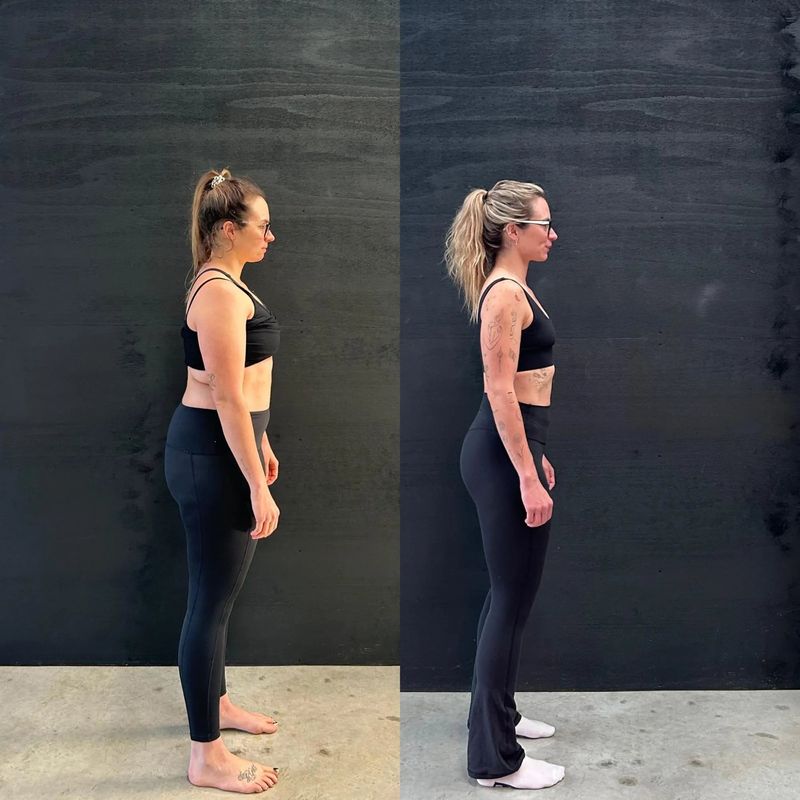
Struggling with poor posture, recurring tightness or feeling uneven through your body? The key to improving posture isn't simply learning to sit or stand up straight. It's understanding how your body organises movement, distributes mechanical loads and coordinates itself throughout everyday activities.
You can sit up straight… but it never lasts
You've probably tried to correct your posture before. Perhaps you've been told to pull your shoulders back, sit taller or engage your core. You make the effort, adjust your position and initially feel like you're standing or sitting better. But before long, you gradually return to your usual position.
Your head moves forward, your shoulders round and the familiar tightness through your neck, shoulders or lower back returns.
This isn't necessarily a discipline issue or a matter of remembering to sit up straight. The problem is that consciously holding yourself in a particular position doesn't necessarily change the underlying mechanics influencing your posture. If your body continues to rely on the same movement strategies to support itself, you'll generally find yourself returning to those familiar positions.
Posture is not something you hold
A lot of conventional posture advice treats posture as a position that needs to be consciously maintained. However, posture is better understood as an outcome of how your body organises itself against gravity and manages mechanical loads.
How you stand is influenced by how you distribute your weight, how your joints coordinate under load and how different parts of your body work together to maintain balance and produce movement.
For example, the relationship between your ribcage and pelvis influences how your body manages its position and transfers forces through your trunk. The way your hips, pelvis and spine coordinate also influences how you distribute weight between your legs when standing and walking.
If these relationships aren't working efficiently, repeatedly trying to pull your shoulders back or force yourself into an upright position is unlikely to create lasting change. The objective should be to improve the movement strategies that contribute to your posture in the first place.
Why “bad posture” develops in the first place
Postural changes generally develop over time as your body adapts to the physical demands and movement habits you repeat every day. How you stand, walk, sit, train and distribute your weight all contribute to the way your body organises itself.
Some common movement patterns we assess include habitual weight shifts towards one leg when standing, limited or poorly coordinated rotation through the hips and trunk, and a lack of effective coordination between the ribcage and pelvis.
These patterns can contribute to familiar postural presentations such as forward head posture, rounded shoulders, excessive arching or flattening through the lower back.
However, these positions shouldn't be viewed in isolation. They need to be considered in the context of how the entire body is functioning. Simply trying to correct the appearance of your shoulders or lower back without understanding the movement strategies contributing to those positions can leave the underlying issues unaddressed.
Why common posture fixes don’t work
There are plenty of exercises and instructions designed to improve posture, but many focus on changing the appearance of a particular body part without addressing how the body is coordinating movement as a whole.
“Pull your shoulders back”
Consciously pulling your shoulders backwards might temporarily change how you look, but it doesn't necessarily improve the relationship between your ribcage, pelvis and spine. You're essentially forcing a position rather than changing the mechanics that influence how your body naturally organises itself.
“Strengthen your core”
Core strengthening is often presented as the solution to almost every postural problem. While developing strength is important, isolating your abdominal muscles doesn't automatically improve how your trunk coordinates with your pelvis, hips and shoulders during movement.
The ability to stabilise and transfer force through your body involves much more than simply having strong abdominal muscles. It requires coordination between different segments of the body, particularly during standing, walking and rotational movement.
“Stretch what’s tight”
Stretching can temporarily reduce the sensation of tightness, but it doesn't necessarily address why certain muscles and tissues are experiencing increased mechanical demands in the first place.
If particular areas are continually working harder to compensate for inefficient movement strategies elsewhere, stretching those areas may provide temporary relief without changing the underlying problem.
The real issue: your body isn’t organising itself efficiently
When we assess posture, we're interested in how the different parts of your body work together to maintain balance and manage mechanical forces.
For example, poor coordination between the ribcage and pelvis can influence how your trunk manages rotational forces. Limited or poorly timed rotation can affect how forces are transferred between your upper and lower body, while inefficient weight transfer between your legs can create an uneven distribution of mechanical demands.
Over time, certain muscles and tissues may be required to compensate for areas that aren't contributing effectively. This can influence how you stand, how you walk and the positions your body repeatedly returns to.
Rather than focusing on correcting one isolated area, we want to improve how the entire system coordinates and distributes mechanical loads.
Why this shows up as pain and tightness
When mechanical loads aren't distributed effectively throughout the body, particular muscles, joints and connective tissues may experience greater demands than they are equipped to manage comfortably.
This can contribute to recurring muscular tension, joint discomfort and restrictions in movement. For some people, these experiences present as persistent neck tightness, upper back stiffness or lower back discomfort.
This is why we don't simply look at where someone experiences pain or tightness. We want to understand how their standing posture, gait mechanics and overall movement strategies may be contributing to those symptoms.
What actually improves posture long-term
At Functional Patterns Surf Coast, we don't approach posture correction as a matter of forcing your shoulders back or trying to hold your spine in a particular position. We look at the movement strategies contributing to your posture and work towards improving them through individualised training.
1. Assessing how you move
We start by assessing how your body currently stands and moves. This includes looking at your gait mechanics, weight distribution, rotational capacity and coordination between different parts of your body.
Posture is influenced by how your body manages these movements, so understanding your movement patterns gives us a starting point for identifying what needs to change.
2. Identifying where the system breaks down
From the assessment, we look at areas where movement restrictions, poor coordination or inefficient load distribution may be contributing to your current movement patterns.
This helps us understand which areas may be overworking, which aren't contributing effectively and where your body may be compensating to maintain balance and produce movement.
3. Rebuilding coordination and alignment
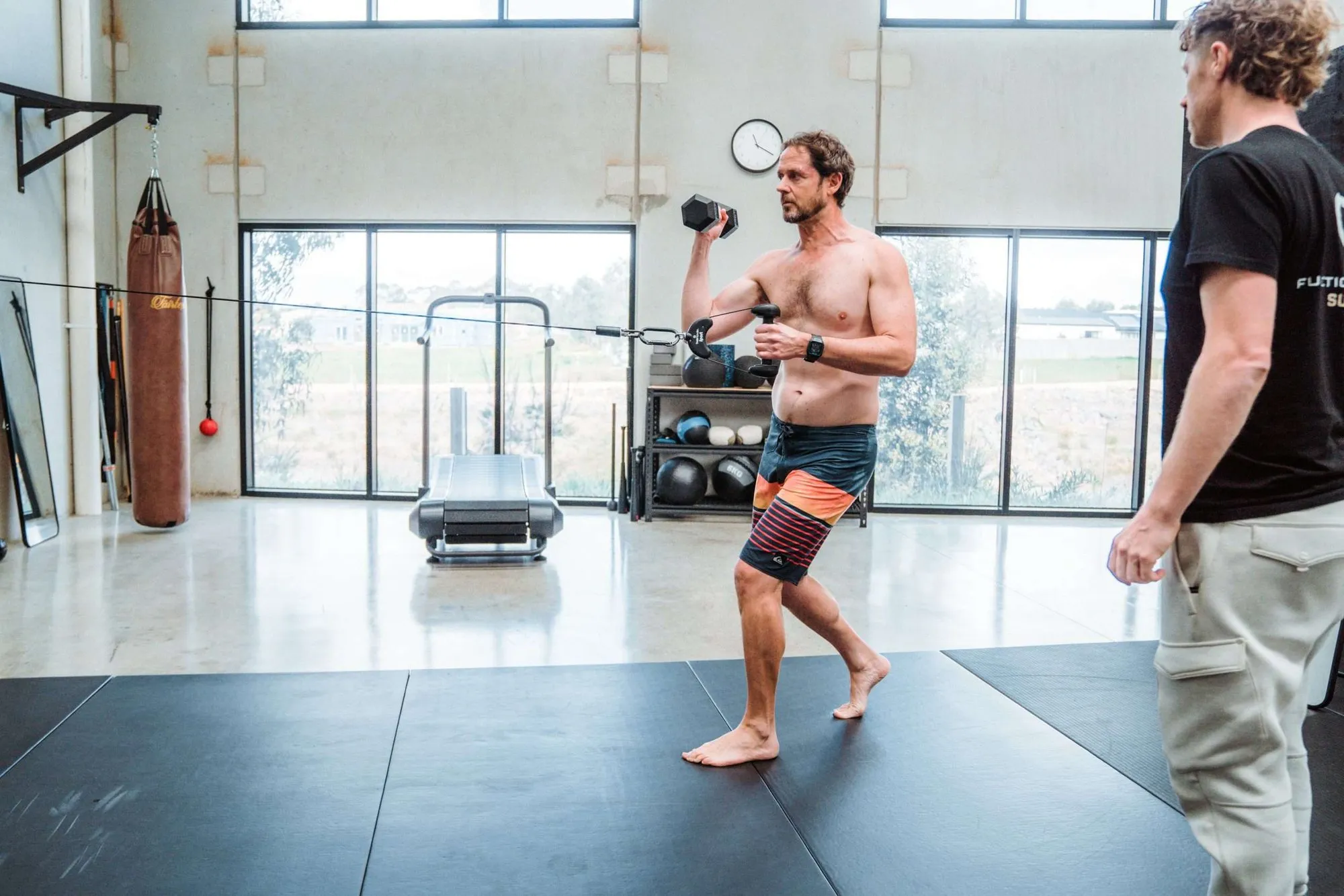
Training is then designed around those findings, using targeted exercises, myofascial work and movement-specific drills to progressively improve structural integration and coordination.
A significant part of this process involves developing the fundamental movement capabilities of standing, walking, running and throwing. These movements require the body to coordinate multiple segments and distribute mechanical loads effectively rather than relying on isolated muscular effort.
As these capabilities develop, the objective is for improvements in posture to become a natural outcome of better movement mechanics, rather than something you constantly have to consciously correct.
What this feels like when it starts working
As movement coordination and mechanical efficiency improve, people may begin to notice changes in how they experience everyday activities.
Standing and sitting may feel less effortful, and there may be less of a need to constantly adjust your shoulders or consciously correct your posture. You may also notice improvements in movement confidence, coordination and the way your body manages physical demands.
The aim is to develop improvements that carry over into everyday life, rather than simply looking better while performing a particular posture exercise.
Who this is for
Posture and movement training at Functional Patterns Surf Coast is particularly suited to people who:
- Feel like they're constantly trying to correct their posture without achieving lasting changes.
- Experience recurring neck, shoulder or lower back tightness.
- Feel uneven, twisted or asymmetrical when standing or moving.
- Have tried conventional posture exercises, stretching or strengthening routines without addressing the underlying issues.
- Want to improve how their body functions rather than simply change how it looks.
The takeaway
Posture isn't simply a position you need to force yourself to maintain. It's influenced by how your body organises movement, distributes mechanical loads and coordinates itself against gravity.
If you want to improve your posture over the long term, the focus needs to extend beyond pulling your shoulders back, strengthening your core or stretching tight muscles.
You need to look at the movement strategies contributing to your posture and work towards improving how your body functions as a whole.
Work With Functional Patterns Surf Coast
If you're looking for posture correction in Torquay, Geelong or elsewhere across the Surf Coast, Functional Patterns offers an individualised approach based on assessing and improving your biomechanics.
We begin with a movement assessment to understand how your body currently stands and moves, identify areas that may need attention and establish a training approach based on your individual requirements.
Rather than giving you another generic posture routine, we want to understand what's happening with your movement and work towards creating meaningful, long-term improvements.
Find out more about our 1 on 1 training.