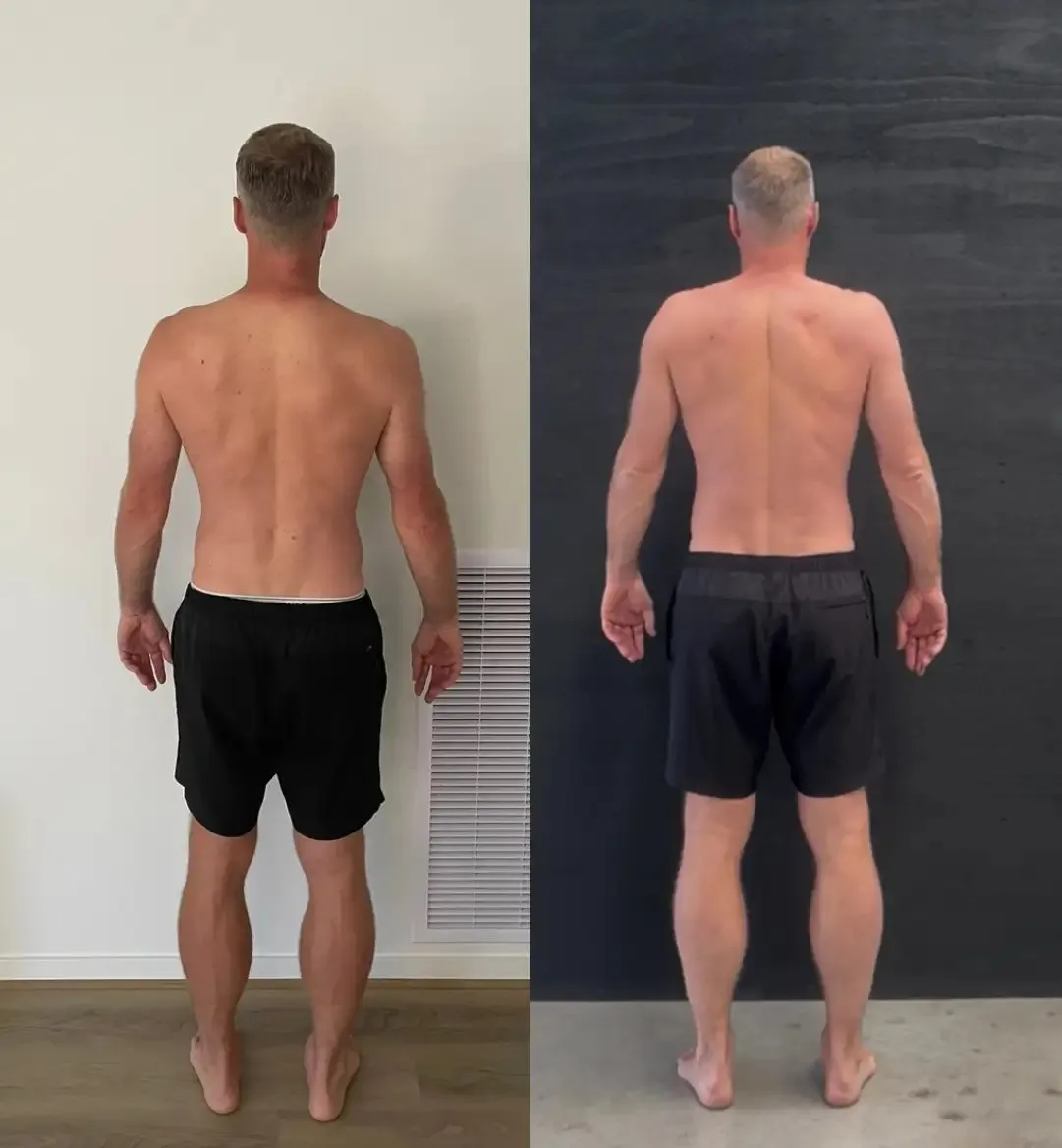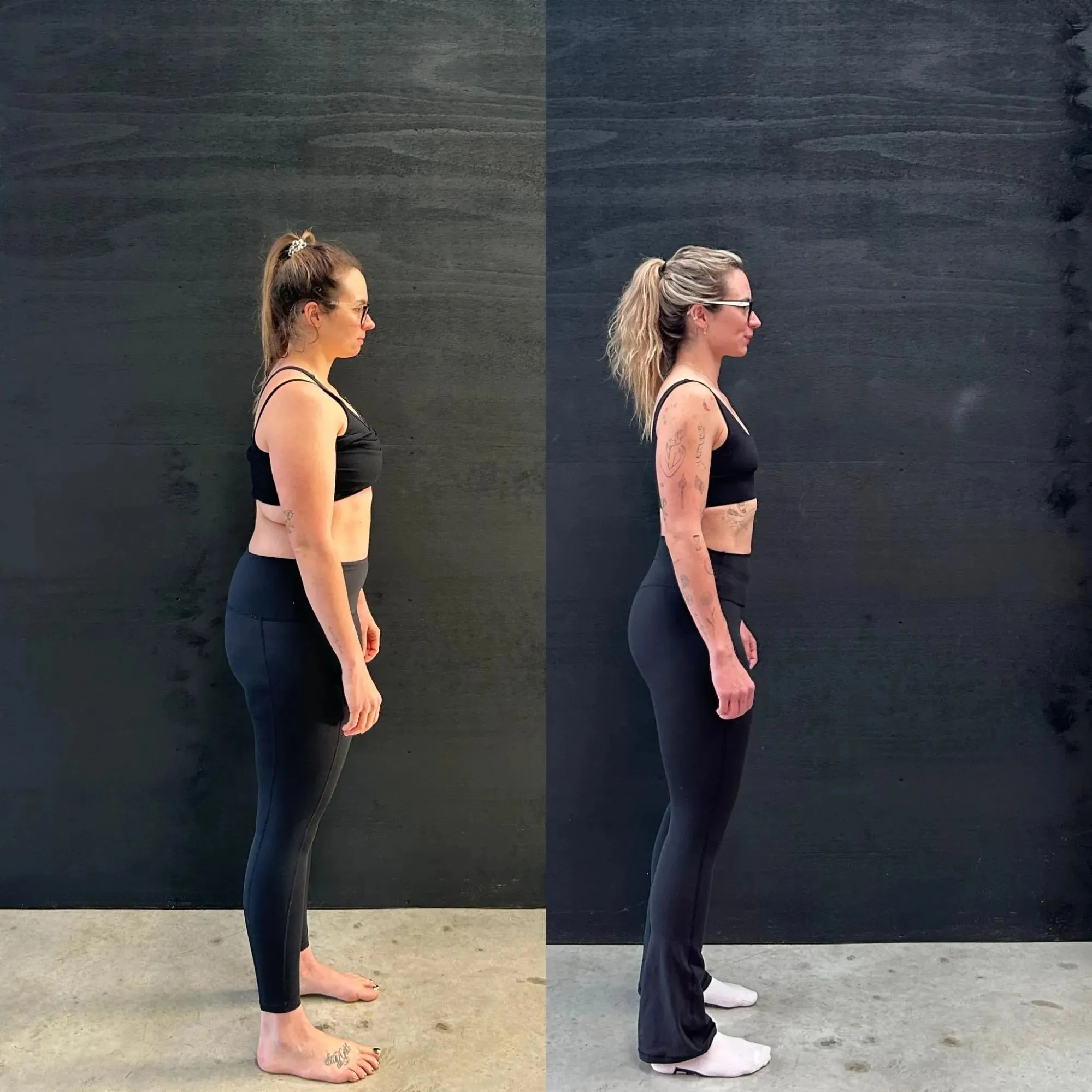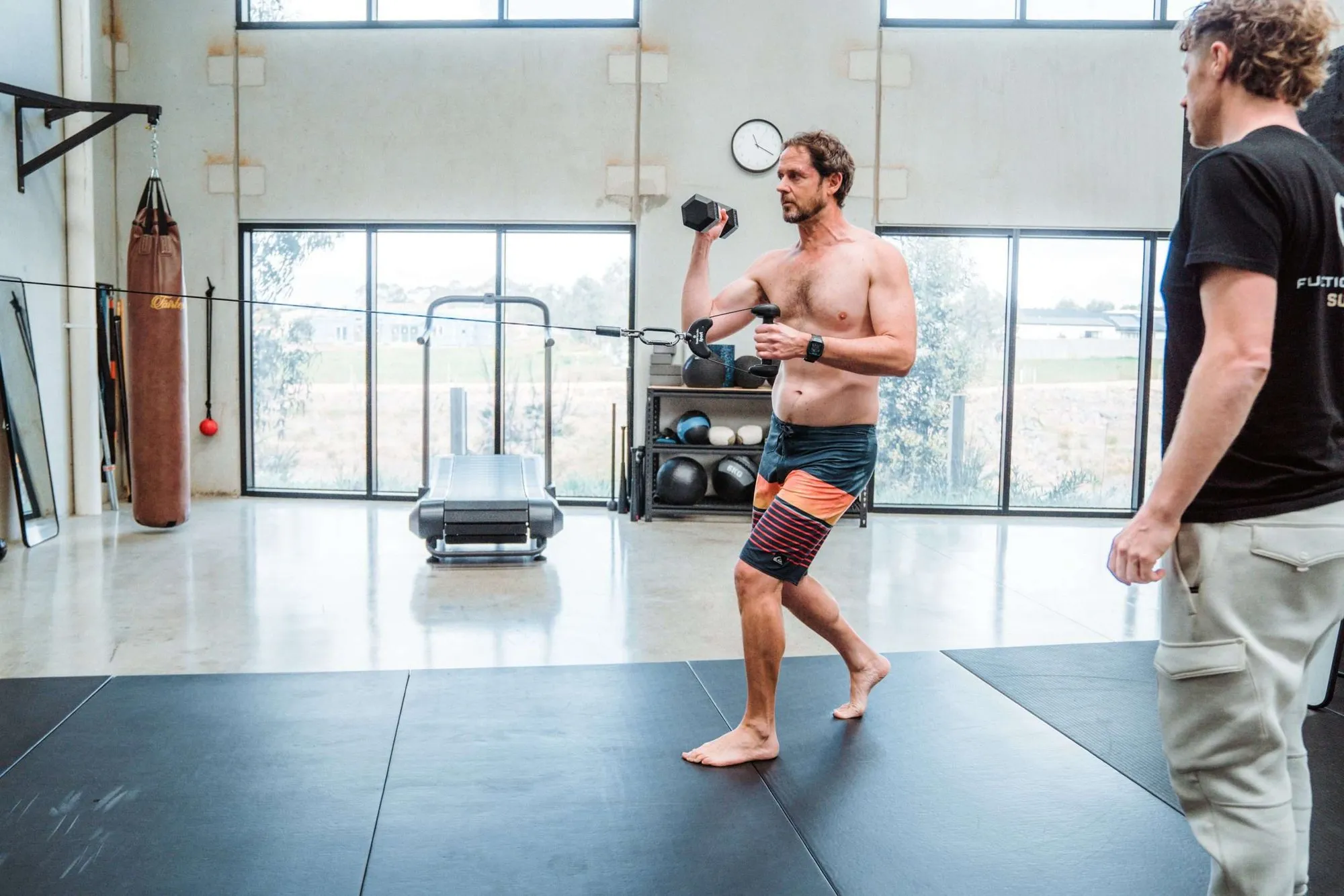
If you type “exercises to improve your posture” into Google, you’ll find endless lists of stretches and shoulder blade squeezes.
But here’s the uncomfortable reality:
Most posture exercises don’t fix posture.
They temporarily change how you feel, not how your body distributes load.
At Functional Patterns Surf Coast, we approach posture differently. We don’t treat posture as a position to hold. We treat it as a reflection of how your body manages force.
Because posture is not cosmetic.
It’s structural.
What Posture Really Is
Posture is the visual output of your internal mechanics.
It reflects:
- How your pelvis is oriented
- How your rib cage is positioned
- How your spine rotates
- How your feet contact the ground
- How your breathing patterns influence tension
You cannot isolate posture to “tight chest muscles” or “weak glutes.” That reductionist model is why so many people try posture correction for years and see no lasting change.
If the way you walk, stand, and load your body is asymmetrical, your posture will mirror that asymmetry.
Exercises that don’t change movement patterns don’t change posture.
Why Most Posture Exercises Fail
Most online advice focuses on:
- Pull your shoulders back
- Stretch your chest
- Strengthen your back
- Hold a wall position
These approaches assume posture is a muscular imbalance problem.
But posture is more accurately a load distribution problem.
If your pelvis rotates forward and to one side every time you step, your spine will adapt. If your rib cage compresses on one side when you breathe, your shoulder position will follow.
You can’t out-stretch structural compensation.
Posture correction requires changing how force moves through your body, not just changing muscle tension.
The Concept Behind Exercises to Improve Your Posture
When people search for exercises to improve posture, what they actually need is:
- Better body alignment
- Improved functional movement
- More efficient force transfer
- Reduced chronic compensation
Exercises only work when they influence those systems.
So instead of asking, “What stretch should I do?” The better question is, “How is my body currently organising itself under load?”
Posture Is About Movement, Not Stillness
Holding yourself upright isn’t good posture.
Being able to move efficiently through walking, lifting, rotating and bending, without collapsing into compensation, is good posture.
The body is dynamic.
Posture must be dynamic too.
That’s why static drills rarely create lasting change. Your nervous system reorganises itself around repeated movement, not brief correction attempts.
The Role of Mobility in Posture
Mobility exercises can be useful, but only when they restore movement options that the body has lost.
Many people are stiff in areas that should rotate and overly mobile in areas that should stabilise.
Improving posture conceptually means restoring:
- Thoracic movement without neck compensation
- Hip rotation without lumbar collapse
- Rib cage expansion without excessive lower back extension
Mobility without control often increases instability. Control without mobility creates rigidity.
Posture requires both.
Core Stability and Load Transfer
Core stability training, when understood correctly, isn’t about bracing harder.
It’s about allowing your trunk to coordinate force between the upper and lower body without unnecessary strain.
If your spine is constantly trying to stabilise asymmetrical forces, posture will degrade over time.
Exercises that improve posture conceptually improve:
- Rotational control
- Contralateral coordination
- Trunk endurance
- Integrated breathing mechanics
Not isolated muscle strength.
Surf Coast Lifestyle and Posture
Living on the Surf Coast comes with specific movement patterns.
Surfing is rotational and asymmetrical. Driving long coastal distances reinforces flexion. Desk work compounds compression.
None of these are “bad.”
But without balancing strength and movement quality, they can gradually shape posture in predictable ways.
Coastal fitness needs structural awareness.
The goal isn’t to stop surfing or stop working, it’s to support spinal health so those activities don’t reinforce imbalance.
Posture Correction Is a Byproduct
One of the biggest misconceptions is that posture correction is something you chase directly.
In reality, improved posture is usually a byproduct of:
- Better gait mechanics
- Balanced pelvic positioning
- Improved rib cage expansion
- Efficient force transfer
When movement improves, posture self-organises.
Trying to manually hold “perfect posture” all day often increases tension and fatigue.
Structural change comes from repetition under correct conditions.
Injury Prevention and Long-Term Health
Poor posture isn’t dangerous because it looks bad.
It becomes problematic when:
- Certain joints absorb more stress than they should
- Muscles remain chronically shortened or lengthened
- Load accumulates asymmetrically
Over time, this can contribute to neck pain, shoulder irritation, lower back discomfort and reduced performance.
Exercises that truly improve posture improve injury prevention because they reduce inefficient loading patterns.
That’s the real goal.
A Smarter Way to Think About Posture
Instead of asking:
“What exercises fix bad posture?”
Consider:
“How is my body currently handling gravity and load?”
Because posture reflects your relationship with gravity.
If your alignment allows efficient distribution of force, posture improves naturally. If your structure constantly compensates, no amount of stretching will permanently change it.
At Functional Patterns Surf Coast, we assess how movement influences posture before prescribing anything.
Posture isn’t corrected through repetition of drills alone, it’s corrected through improving the system.
Final Thoughts
Exercises to improve your posture absolutely exist.
But they are not generic.
They are context-dependent, structure-aware and built around improving how your body manages force over time.
If you’re on the Surf Coast and noticing tension, asymmetry or recurring discomfort, the solution isn’t to hold yourself straighter.
It’s to move better.
Posture is not something you force.
It’s something you earn through efficient movement.