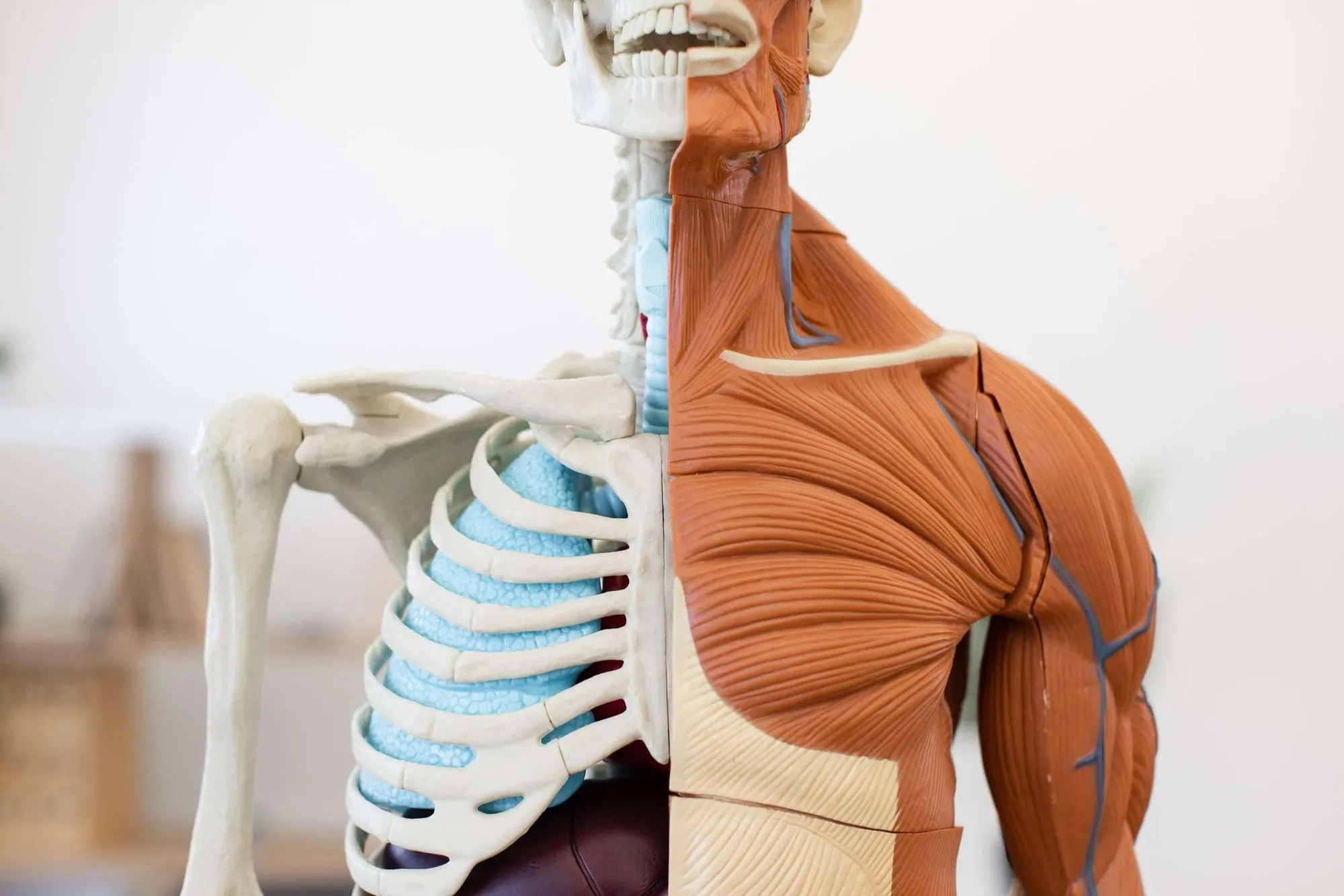
Fascia is the biological fabric that holds us together, the connective tissue network. You are about 70 trillion cells, neurons, muscle cells, epithelia, all humming in relative harmony; fascia is the 3D spider web of fibrous, gluey, and Fasciawet proteins that binds them together in their proper placement.
‘Fascia’ has many designations for different areas, topologies, and histologies within our biological fabric. Traditionally, ‘fascia’ as a medical term applies only to certain dissectible bits of fabric within the body. Thoracolumbar fascia, the fascia lata, the pannicular fascia, the fascia profundis, these are recognized by science to be fascial sheets.
Here, though, and increasingly in scientific and research circles and professionals worldwide, ‘fascia’ has a wider definition: all the collagenous-based soft-tissues in the body, including the cells that create and maintain that network of extra-cellular matrix (ECM). Answering the question “what is fascia?” with this new definition includes all the tissues traditionally designated as ‘fascia’ in classical anatomy, plus all the other very similar tissues arrayed in different ways around the body; tendons, ligaments, bursae, and all the tissue in and around the muscles, endomysium, perimysium, epimysium. They are all made out of largely the same stuff and created in such the same way.
Also included would be the fascia around the organs: the coelomic bags that hold the organs in the peritoneum and mesentery in your abdominal cavity, the mediastinum, pericardium, and pleura that hold the organs in the chest cavity, and the membranes, dura and pia and perineuria, that surround the brain, spinal cord, and peripheral nerves.